


Here’s a hot take that might ruffle a few algorithmic feathers: GPTs are great at math, but they’re bad at style.
In a world obsessed with optimizing everything—from your grocery list to your hinge profile—it’s tempting to think that AI could just “solve” fashion. Plug in your preferences, your budget, your body type... boom. Wardrobe, complete.
But fashion isn’t a spreadsheet. It’s not a problem to solve—it’s a story to tell.
And that’s why GPTs (and other AI search tools) fall short. They’re built to filter by function. Not to spark emotion.
Let’s break it down using a little quadrant magic (because don’t we all miss high school math). Let’s put ‘Cheap’ to ‘expensive’ on the Y-axis and ‘selling function’ vs. ‘selling emotion’ on the X-axis. Shoutout to Curious Commerce who initially introduced this concept and whose post ‘Can AI be my personal stylist?’ really influenced my thinking here. Definitely worth the read!
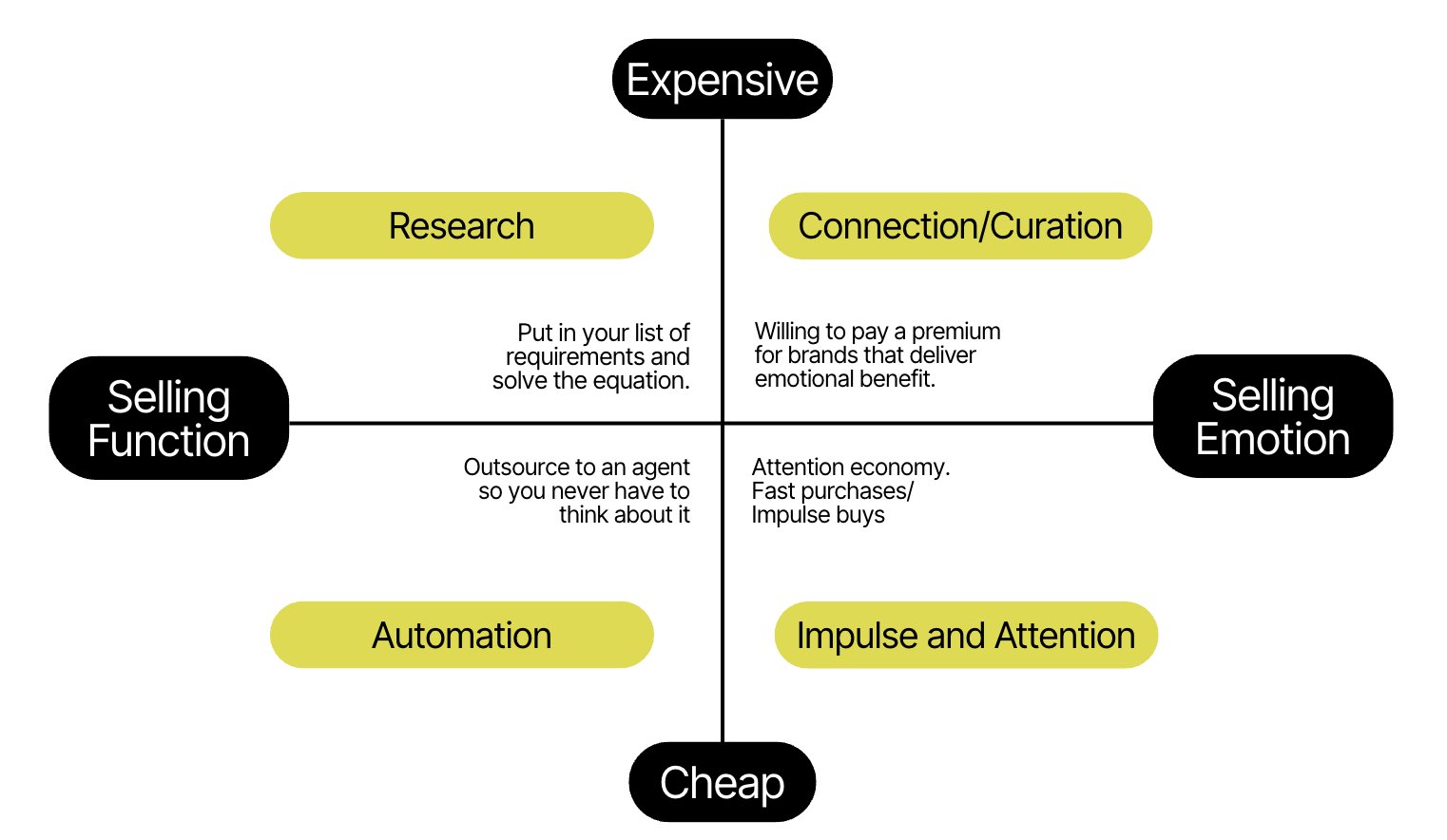
In one corner, we’ve got cheap and functional—think Amazon Basics, Costco socks, the kind of stuff you buy while reordering toothpaste. This is automation at its peak. It’s not stylish, it’s not emotional. It’s efficient. Agents are going to take over this space and I’m here for it.
Then there’s cheap and emotional—this is the domain of fast fashion. TikTok trends. Zara hauls. Shein’s 42 tabs open. It’s driven by attention, FOMO, and instant gratification. Feels good for five minutes. Leaves you with the fashion equivalent of a sugar crash.
Next up, expensive and functional. Think bridesmaid dresses, hiking boots, performance gear you research for hours. This is “solve-the-equation” territory. You outsource it to ChatGPT or Google Shopping and pray for a good return policy.
But the top right corner? That’s where the magic lives.
Expensive and emotional.
This is where great brands win. Not because they’re the cheapest. Not because they “solve” your needs. But because they invite you into a world. They make you feel seen, stylish, and smart. They build connection—and that’s what keeps you coming back.
Brands like Bandit Running are doing this masterfully. On paper, they sell performance wear. But in practice, they’re selling identity. Community. Belonging. Their gear signals a mindset, not just a mile pace—and their brand is laced with storytelling, aspiration, and cultural context. You don’t buy Bandit just to run—you buy it to be part of something.

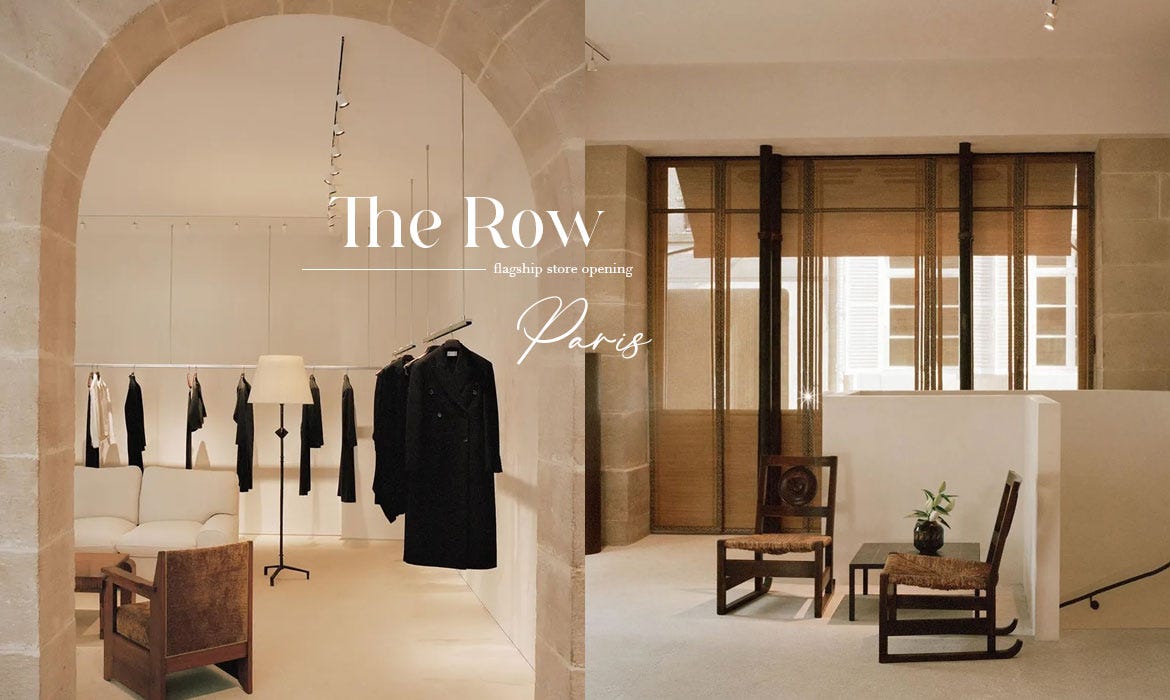
On the luxury end, take The Row. They’ve built an empire not on logos or loud design, but on quiet confidence and whisper-level aspiration. Their pieces are eye-wateringly expensive—and still, people covet them. Because The Row isn’t selling cashmere. They’re selling a lifestyle: restraint, elegance, timelessness. It’s the fashion version of a deep breath. GPTs can’t parse that.
If you’re a brand, this should sound alarm bells. Because the tools that are rising to dominate discovery—AI search, sponsored content, functional queries—are pointing shoppers toward the bottom-left of this map. Efficient. Low-margin. Emotionless.
And that’s not a game most brands can win.
The opportunity? Build for the top right. Build emotional connection. Build trust. Build curation.
That’s where Beni comes in.
We’re not building an AI that tells you what to buy.
We’re building an AI that helps you discover what feels right—for your style, your values, your life.
We clean up the chaos of resale, yes. But more than that, we aim to reintroduce feeling into search. Because we believe the future of fashion needs more connection, not just more options.
In a world where everyone’s optimizing for clicks, we’re optimizing for curiosity. For taste. For trust.
GPTs are the new search engines—but they’re not stylists. They can recommend five brands under $100. But they can’t tell you which one will make you feel like a million bucks. And they definitely can’t tell you which piece you’ll still be reaching for in five years.
Because style is a feeling. Not a filter.
What do you think? Let me know in the comments!
Really like this framework! So much of a brand comes from the intangibles and history that you feel like you are being invited into - the craftsmanship, the perspective being stated by the brand, the artfulness - all things that make me feel emotionally connected (side note: Auralee is my recent obsession in this quadrant). I've used AI to help sort out my closet (e.g., identify gaps, help build a capsule wardrobe conceptually), but when it comes to actually styling - I wouldn't let it touch me. Totally agree that it's super helpful with functional items where specs matter.
I hadn’t thought of this in terms of that quadrant, but it makes a lot of sense. I’ve tried ChatGPT’s shopping search integration, and it’s only helped with functional items. It also lacks that social proof, storytelling element.
Being on socials, it’s telling what brands have a distinct brand identity and taste to fit into that top-right quadrant. Kith is a great example, Ralph Lauren has always been clear. Sanoe’s a small niche brand but also fall in the top right.