

How to Take Care of Your Clothes: A Practical Guide to a Wardrobe that Lasts
Good clothes deserve better habits. Here’s how to care for your wardrobe, item by item.

Laundry isn’t the sexiest topic in the world of fashion, but it can be the make-it or break-it for many pieces in your closet. And fabric care isn’t just about laundry. It’s about how long your clothes last, how they look after each wash, and how well they hold their shape, texture, and color over time.
In a world of fast turnover and low-quality garments, knowing how to take care of your clothes is a quiet act of resistance. Whether you're buying secondhand, investing in fewer better pieces, or simply trying to stop your favorite sweater from pilling after two wears, the way you treat your fabrics makes a difference.
This guide walks you through the essentials of fabric care: how to care for different materials and garments, what to avoid, and how small changes can make a big impact on your wardrobe’s lifespan.
Start with the Label
Most clothes include care instructions, and there’s no better place to start. The manufacturer is the expert on how to care for the item. If the tag says to air dry or wash inside out, do it!
That said, labels don’t always tell the full story. Dry clean only? You might be able to get away with handwashing. Tumble dry low? You might be better off air drying.
Instead of blindly following symbols, ask:
Is this fabric prone to shrinkage or fading?
Is the structure (like tailoring or interfacing) delicate?
Can I hand wash or spot clean instead of dry cleaning?
Not sure how to make that call? The rest of this guide is designed to help!
Wash Less, Care More
One of the simplest ways to extend the life of your clothes and reduce your environmental footprint is to wash them less often. It’s a habit shift that goes against decades of marketing around “freshness” and “cleanliness,” but it makes a real difference.
Frequent washing, especially in hot water or harsh cycles, wears down fabric fibers, fades colors, and can warp the shape of garments over time. And not everything that’s been worn once is dirty. Depending on your lifestyle and typical day, you might be able to get away with several wears before a top or shirt needs to be cleaned.
For many items like jeans, sweaters, jackets, and trousers, spot cleaning, steaming, or airing out between wears is often enough. The mental reset is to put the burden of proof on washing, rather than not washing. If an item is perceptibly dirty, wash it… but if it’s not, don’t.
Here’s some tricks to extending time between wash cycles:
Let clothes breathe on a hanger or over a chair for a day to naturally freshen them up, especially if they're made from natural fibers like cotton, wool, or linen.
If something has a spill, sweat spot, or odor, target that area rather than defaulting to a full wash. A damp cloth with gentle soap or a fabric-safe stain remover can do the job without subjecting the entire garment to friction and detergent.
Try storing sweaters or delicates with cedar blocks or lavender sachets to help with odor control.
A hand steamer can kill bacteria and refresh without the wear and tear of washing. This is especially useful for blazers, dresses, and clothes that are harder to clean.
Freeze denim or knitwear (yes, really!) to kill odor bacteria without washing
When you do wash, choose lower-impact methods: use cold water, a gentle cycle, and air drying when possible. These small changes help clothes last longer, but they also lower energy use and reduce microfiber shedding, especially from synthetic garments. Washing less doesn’t mean being less clean; it means being more strategic.
Care by Fabric and Garment Type
Now that we’ve established some rules of thumb on fabric care, let’s get into the weeds. Different garments and textiles have different needs. While this can make laundry a little more complicated than throwing everything in one load, it’s absolutely worth it to give your clothes the care they deserve. And you’ll be surprised at how simple it can be to combine loads once you know what each item needs.
First: A word on Laundry Separation
Let’s be honest: we don’t always separate our laundry. You just did a load of whites and now your favorite white tee is dirty; you’re not going to wait weeks to get it clean. And yes, we’ve all tried throwing in the towels in with the regular load. Who made these rules anyway? Are they all just a myth?
The unsurprising answer is no; laundry separation is not a myth. If you follow no other rules in this fabric care guide, please separate your whites from colors and your towels from regular laundry. If you don’t trust the wisdom of generations of laundry-doers, here’s why.
Whites vs. Colors: You may have noticed (when you threw your white tee in with the colored load, we see you!) that your tee came out just fine. This is likely because you washed your colors on cold. While it’s fine to wash whites in cold water from time to time, they should be washed warm or hot. While we don’t recommend warm water for any other fabric, it’s the best way to keep stains and discoloring at bay, keeping your whites white.
Here’s the kicker: hot water is much more likely to cause colors to bleed, even clothes you’ve washed countless times. This is a good reason to wash anything not white on cold, to prevent fading. But it’s also the reason you should separate your whites and colors: to wash them each in the right temperature, and avoid color bleeding in the process.
Towels vs. Regular Laundry: At their best, towels are soft, plushy, and cozy. But towels are also breeding grounds for mildew, and even the most meticulous towels might build up that “towel” scent after cycles of use. Washing and drying towels with your other clothes can impart that smell to your wardrobe.
Cotton (Everyday Basics + Button-Downs)
Cotton is durable and forgiving, which is why it’s the backbone of most wardrobes. T-shirts, shirts, and casual trousers can usually be machine washed cold and tumble dried low, although line drying preserves shape and prevents shrinkage. If you have the time and space, air drying can help these items last even longer. Button-downs or cotton poplin pieces may benefit from a low-heat iron or steam.
If a garment has delicate trim or a looser weave (like gauze), treat it more gently. Turn it inside out in a mesh bag, use the delicates cycle, or hand wash when in doubt.
Wash: Cold water, normal or gentle cycle
Dry: Tumble dry low or air dry
Watch for: Shrinking and color fading
Denim (Jeans + Jackets)
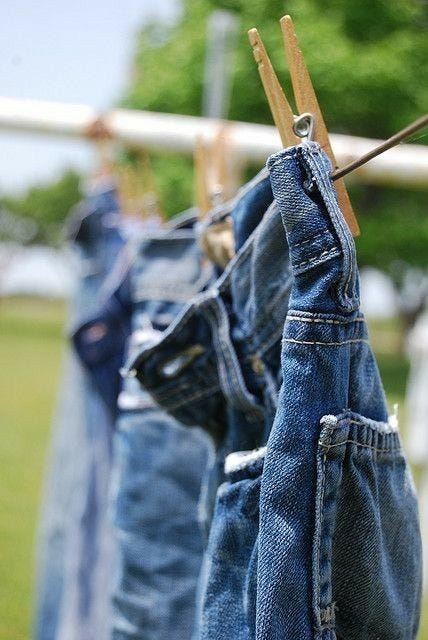
Denim doesn’t need frequent washing— in fact, less is more. Washing can cause your denim to wear out faster. Spot clean when possible, and when a full wash is needed, turn jeans inside out and wash cold on a gentle cycle. Don’t tumble dry your jeans! Air dry flat or hang to preserve fit and prevent fading.
Jean jackets follow similar rules but may need occasional lint rolling or steam freshening instead of a full wash.
Wool (Sweaters + Structured Outerwear)
Wool is naturally odor-resistant, so you might find that you rarely need to wash your wool garments. Wool sweaters can usually be hand washed in cool water with a gentle detergent or labeled wool wash. Avoid wringing wool: gently squeeze and lay flat to dry (not on a drying rack). Reshape knits while damp so they maintain their shape.
Structured wool pieces like coats or tailored trousers are best dry cleaned sparingly, as over-cleaning breaks down the natural oils and these garments are often constructed with padding and fusible lining that can be damaged by washing. Between wears, brush off debris, steam lightly, and let them air out.
Wash: Hand wash cold or use a wool-specific cycle
Dry: Lay flat—never hang or tumble
Watch for: Shrinking, stretching, or felting
Tip: Use a wool detergent and store folded to avoid stretching.
Silk (Blouses + Scarves + Slips)
Silk is delicate but not impossible to care for. Most silk garments can be hand washed in cool water with a pH-neutral detergent. Blot dry (don’t wring), and lay flat or hang to dry. Steam or iron inside out on low heat with a cloth between the iron and the fabric.
For structured silk garments or pieces with lining, dry cleaning may preserve the shape better. Scarves can often be gently hand washed and steamed to restore sheen.
Wash: Hand wash cold with mild soap, or dry clean if delicate
Dry: Lay flat or hang in shade
Watch for: Water spots and dye bleeding
Tip: If your silk piece feels hard or looks dull and lifeless, take it to the dry cleaner to restore life!
Linen (Pants + Dresses + Shirts)
Linen is a beautiful natural fiber that softens with wear and washing, but it’s prone to wrinkling and shrinkage. Wash cold and hang dry to avoid shrinkage, and iron while damp to get crisp, wrinkle-free linen. For tailored linen garments (like suits or lined dresses), dry cleaning or steaming is safest to maintain structure. Unlined pieces are more flexible for home care.
Wash: Cold water, normal or gentle cycle
Dry: Lay flat or hang dry; avoid high heat
Watch for: Wrinkles and shrinking
Synthetic Fabrics (Activewear + Blends + Lined Garments)
Polyester, nylon, and acrylic are durable and often machine washable, but they retain odors and can shed microplastics. Wash synthetics cold, inside out, and skip the fabric softener (it traps odors). Hang dry activewear if you can to retain stretch, shape, and performance long term. Delicate synthetics like chiffon or mesh benefit from mesh bags and gentle cycles.
Wash: Cold water, regular or gentle cycle
Dry: Air dry or low tumble
Watch for: Odor retention and static
Delicates (Lingerie + Sheer Pieces + Embellished Items)
For intimates, lace, or anything sheer or embellished, hand wash is safest. Use lukewarm water and a gentle detergent, swirl (don’t scrub), and blot dry in a towel before laying flat. If using a machine, place items in a mesh bag and wash on cold, delicate cycle. Avoid high heat drying—it warps elastic and damages trims.
Wash: Lukewarm water, hand wash, gentle detergent
Dry: Air dry
Tailored Items (Suits + Blazers + Structured Dresses)
Tailored garments often contain multiple materials (outer fabric, lining, interfacing) that respond differently to water. Luckily, these pieces don’t need to be cleaned often since they’re worn layered on other garments.
Don’t try washing these pieces at home; dry clean them only when truly necessary. In between, steam to refresh and spot clean gently. Use wide hangers to maintain shoulder shape, and store in breathable garment bags to prevent dust.
Leather + Suede (Jackets + Bags + Footwear)
These natural materials shouldn’t be machine washed. Spot clean with a damp cloth, use a specialized leather cleaner when needed, and condition periodically to prevent drying or cracking. Always store away from direct sunlight and heat to avoid fading or warping.
Leather can be an almost magic material, able to “heal” or regain life even after severe damage. Don’t resign a beloved bag or pair of shoes to be discarded just because it’s stained or scuffed. Explore leather restoration content online, or take it to a professional
Rayon / Viscose / TENCEL / Lyocell (Dresses, tops)
These fabrics are less durable than cotton, linen, and polyester, so treating these garments with care will extend their lives and keep them looking great.
Wash: Cold water, gentle cycle
Dry: Air dry, and if possible lay flat to avoid stretching
Watch for: Shrinkage, fabric distortion
Tip: Treat like a delicate, especially when wet.
Store Smarter
So you’ve washed your clothes perfectly. Now, let’s store them correctly. Storage habits play a big role in garment longevity, and some simple tips will make a big difference. Here’s how to avoid unnecessary damage:
Fold heavy knits and sweaters. Hanging stretches them out.
Hang with purpose. Use padded or structured hangers for delicate or tailored pieces.
Keep clothes clean before storing. Moths and mildew love body oils and food residue.
Avoid plastic. Use breathable garment bags for long-term storage.
Rotate seasonally. Check stored items for damage, moisture, or wear.
Small storage upgrades make a long-term difference, especially with investment pieces or vintage.
Handle Repairs Early
A missing button or loose seam doesn’t mean the end of a garment. But the longer you wait, the less likely it’ll get fixed.
Keep a basic repair kit on hand:
Needle and thread
Small scissors or seam ripper
Spare buttons and snaps
Fusible tape or fabric glue for quick patches
Learn one or two basic hand stitches (Youtube is great for this!) or find a local tailor or repair service. Maintaining what you already own is one of the most sustainable things you can do.
A Final Word:
Taking care of your clothes doesn’t have to be complicated. It just takes consistency. A few small shifts in how you wash, store, and maintain your wardrobe can stretch the life of your favorite pieces by years.
If these instructions feel complicated or overwhelming, don’t sweat it! Try incorporating these guidelines one at a time and see the difference it makes. Fabric care isn’t about perfection, but building these habits will help you get the most out of your favorite pieces.
What tips do you have? And what questions?
I love that you’re writing about clothing care as an aspect of being a conscious shopper, in addition to shopping secondhand. There is no single perfect solution for sustainable fashion - only an ecosystem of a series of mindful habits.
Thank you for this breakdown. I promised myself if I got approved for my apartment with a washer and dryer, I would learn how to properly wash/dry my clothing. This post is helping me keep that promise to myself.
My brain lit up in the part of this article or post ( I'm new to Substack and am not sure what to call it) in which you stated that cleanliness was not exempt from decades of marketing propaganda. My brain went of course of they did. Highly fascinating. Thank you for sharing.