


Fashion isn’t just about what we wear; it’s about how what we wear gets made. And increasingly, that story has big consequences. Whether it’s about waste, labor exploitation, human rights, or environmental damage, fast fashion has caused a lot of harm.
Maybe you’ve heard about some of these issues but you’re not sure what’s the big deal about fast fashion, or you’ve heard the term “sustainable fashion” but it sounds like an oxymoron. You’re in the right place. This primer is for you. Let’s break it down.
What Is Fast Fashion?
Fast fashion refers to the business model of producing cheap, trend-driven clothing at high speed and high volume. Think ultra-low prices, hundreds of new styles every week, and clothing designed to be worn for a season (or less) before being replaced.
Fast fashion took off in the early 2000s as brands like Zara, H&M, and later Shein and Fashion Nova built global empires by shortening production timelines and cutting costs. The goal was to give customers constant newness at rock-bottom prices.
As these brands found success, other apparel brands took notice and started shifting their production timelines as well, reducing costs and quality to stay competitive. As a result, the last few decades have seen an explosion in the quantity of clothing produced and consumed worldwide. Consumer behaviors and expectations have shifted profoundly, from treating apparel as an investment to something disposable.
This consumer shift is only possible because fast fashion is so cheap. But there’s a cost behind the price tag. Fast fashion has been linked to:
Environmental degradation, including excessive water use, microplastic pollution, and carbon emissions from global supply chains.
Garment worker exploitation, particularly in countries with weak labor protections.
Waste and overconsumption, with the average person buying more clothes and keeping them for less time than ever before.
What Is Sustainable Fashion?
Sustainable fashion is a broad term, but at its core, it refers to clothing made with lower environmental impact and better labor practices. This can include:
Materials: Using organic, recycled, or lower-impact fibers (like linen, TENCEL, or organic cotton).
Manufacturing: Ensuring fair wages, safe working conditions, and ethical sourcing.
Longevity: Designing clothes to be worn, repaired, and re-worn, rather than discarded.
Be careful: truly sustainable fashion is still a niche market. Many brands use terms like “eco,” “green,” or “conscious” without clear standards, a practice known as greenwashing. And sustainable new clothing can be expensive, putting it out of reach for many.
That’s where secondhand comes in.
Why Secondhand Matters
Secondhand isn’t just budget-friendly. It’s one of the most sustainable choices you can make as a consumer.
Here’s why:
It extends the life of clothes already in circulation.
Every secondhand purchase keeps a garment out of landfill and delays the need for something new to be produced.It reduces demand for fast fashion.
When you buy used, you're not contributing to the cycle of overproduction that defines fast fashion.It makes higher-quality clothes more accessible.
You can often find well-made, long-lasting pieces secondhand at a fraction of their original price.It’s a way to participate in sustainable fashion without buying new.
If sustainable brands are out of your price range, secondhand lets you shop ethically without spending more.
Secondhand also creates space for style exploration. It offers a broader range of styles, eras, and materials than most retail racks, and it gives clothes a second life that might otherwise be wasted.
What About Donating or Reselling?
Secondhand systems only work if clothes are passed on responsibly. If you’re decluttering your closet, consider resale, swaps, or targeted donation for clothes in good condition.
But keep in mind: donation centers are overwhelmed. Many clothes, especially lower-quality fast fashion, end up getting downcycled or landfilled even if you donate them.
The more intentional you can be about what you buy in the first place, the more sustainable your wardrobe becomes. Treat your clothing with love and care, so when you’re ready to pass it on, it’s in a condition that someone else will appreciate.
Rethinking Personal Consumption: How We Shop Matters
If fast fashion has changed the way clothes are made, it’s also changed the way we think about them. In just a couple of decades, the norm has shifted from seasonal wardrobe updates to near-constant shopping. New drops every week. Hauls with 20+ items. A mindset that clothes are cheap, replaceable, and not really meant to last.
This isn’t accidental! It’s by design to increase profits for apparel companies. And the strategy has worked. Global clothing production has doubled since 2000, but the average number of times a garment is worn has dropped by over 30%. We buy more, wear it less, and toss it sooner.
Sustainable fashion can’t fix that just by offering better materials. It has to include a shift in how and why we consume in the first place.
That means asking:
Do I really need this, or am I shopping out of boredom?
Will I still want this piece in a year, or is it just impulse?
How many times will I actually wear this, and what will I wear it with?
Secondhand plays a key role in this shift, but it’s part of a larger mindset change. It’s about slowing down, buying with purpose, and treating clothes not as throwaways, but as functional, expressive tools that deserve care and longevity.
The most sustainable wardrobe isn’t the one with the greenest tags. It’s the one that’s worn well, loved often, and built with intention.
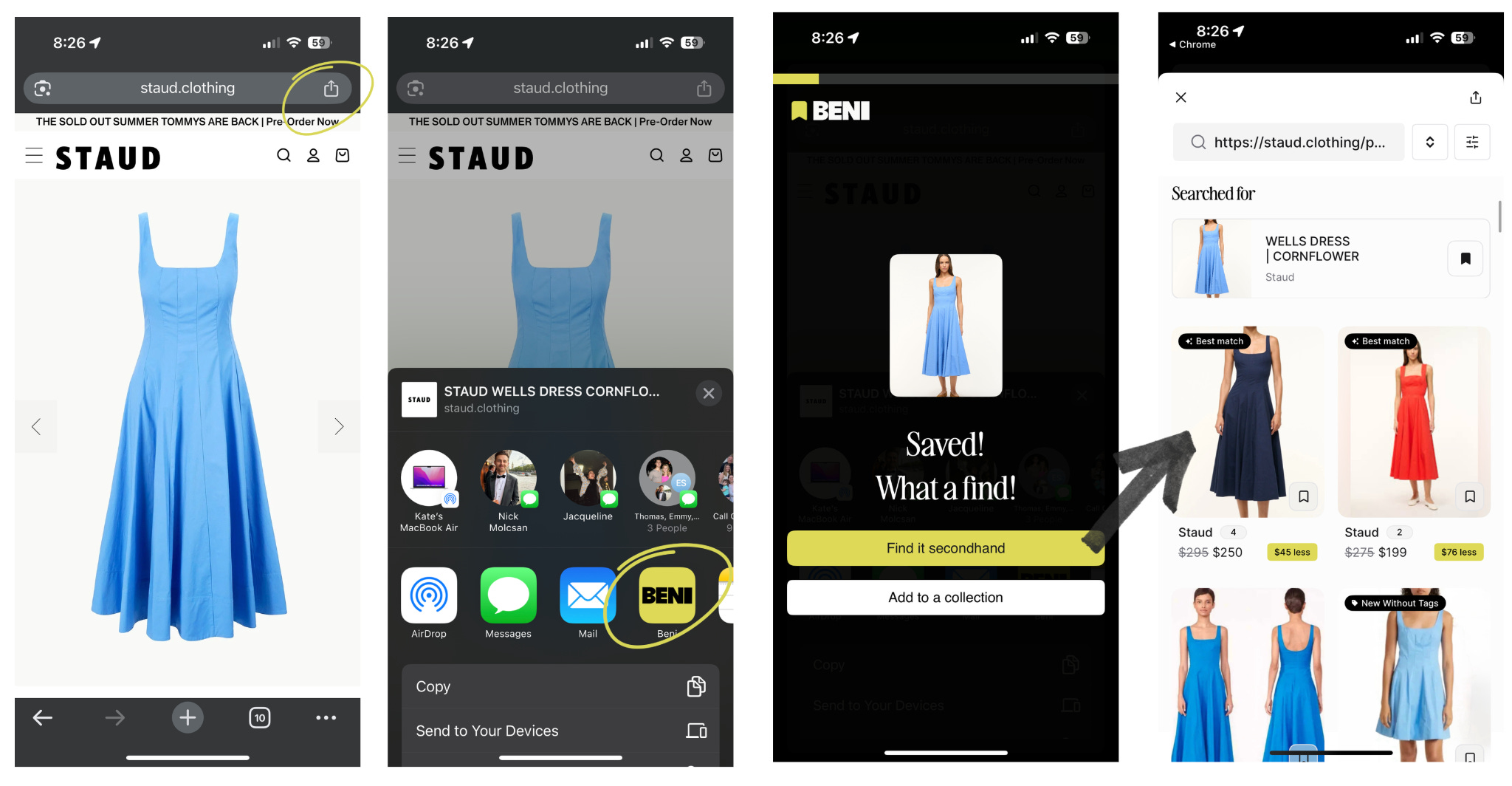
To help, we make it easy to store all your inspiration into Beni so instead of impulse buying you can get the dopamine hit by adding it to your Beni storefront, knowing you can revisit later. When you’re ready to buy — Beni will show you the item you saved along with secondhand listings so you can make the best choice.
Have you tried this feature in the Beni App yet?
No One Shops Perfectly, But Everyone Can Shop Better
You don’t need to overhaul your closet overnight. Sustainable fashion is about awareness and agency, not guilt. Every secondhand purchase you make keeps clothes in use, reduces waste, and makes fashion more circular.
Whether you’re just starting out or already a secondhand pro, your choices matter more than you think. Start with what’s already in your closet.
So many good finds. Don’t know why anyone WOULDN’T use Beni!